Ventilation and Airflow Basics for a Cold Plunge

An indoor cold plunge needs real ventilation planning because cold water sitting in a warmer room produces steady condensation, which over months can damage drywall, flooring, and framing if it isn’t vented out. Budget $150 to $400 for a bathroom-rated exhaust fan and, for a basement or fully enclosed room, another $200 to $600 for a standalone dehumidifier, together adding roughly 5 to 10 percent to a typical indoor installation cost. Outdoor units need less humidity planning but still require clearance around the chiller housing for airflow. Here’s what actually needs venting, what it costs, and where people most often get it wrong.
Why Does a Cold Plunge Need Ventilation at All?
The core issue is temperature difference. A tub holding water at 45 to 55 degrees inside a room kept at a normal indoor temperature creates a persistent gap between the water’s surface and the surrounding air, and that gap drives condensation the same way a cold glass of water sweats on a warm day, just continuously rather than for a few minutes. In a small bathroom or basement corner with limited air exchange, that moisture has nowhere to go and settles into surfaces instead: ceiling drywall, wall cavities behind tile, wood subfloor under vinyl or laminate. None of this happens overnight, which is exactly why it gets overlooked during planning and shows up as an expensive surprise a year or two later.
What Ventilation Does an Indoor Installation Actually Need?
A bathroom-rated exhaust fan, the same category used for showers, is usually enough for a single tub in a small room, provided it vents to the outside rather than dumping moist air into an attic space where it causes the same problem one level up. Size the fan to the room’s cubic footage, not just the tub, and look for a continuous-run or humidity-sensing model rather than a basic switch-activated fan, since condensation continues building for a while after a session ends, not just while someone is actually in the water. For larger or fully enclosed rooms without an exterior wall for venting, a standalone dehumidifier rated for the room’s square footage is often the more practical fix.
What Does Ventilation Cost to Add?
A basic bathroom exhaust fan installed by an electrician runs $150 to $400 depending on ductwork complexity and whether new venting to the exterior is needed. A humidity-sensing upgrade adds $50 to $100 over a basic switch-controlled model, worth it for a room that sees regular use. A standalone dehumidifier sized for a basement installation costs $200 to $600 depending on capacity, plus a small amount of ongoing electricity to run it. None of this is optional spending dressed up as an upsell. Skipping it is one of the more common reasons indoor cold plunge owners end up dealing with mold or warped flooring within the first year or two.
What About Airflow Around the Chiller Itself?
Separate from room humidity, the chiller unit that keeps the water cold needs its own clear airflow to avoid overheating and shortening the compressor’s working life. Keep at least 12 to 18 inches of open space around any chiller housing, indoor or outdoor, and avoid tucking it into a tight closet or cabinet without a vent path. An overheating chiller cycles less efficiently and wears out faster, turning what should be a five to ten year piece of equipment into one that needs replacing much sooner.
Do Outdoor Installations Skip Ventilation Entirely?
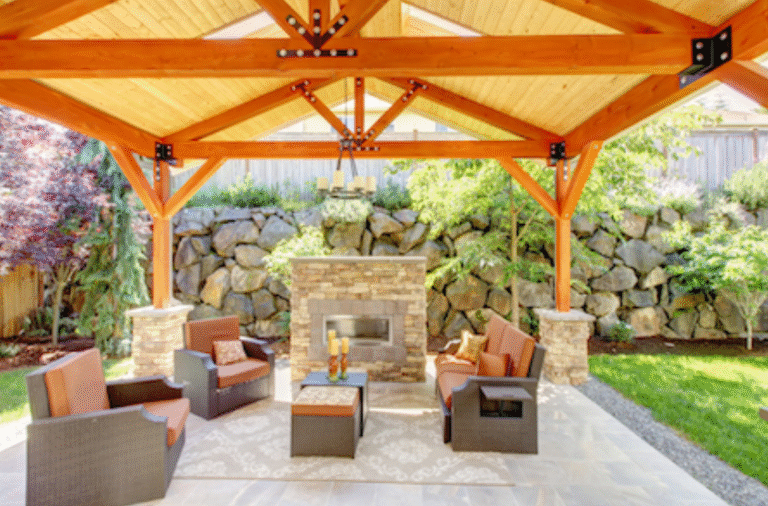
Mostly, yes, for the room-humidity side of the equation, since open air handles condensation naturally. What still matters outdoors is the same chiller clearance rule as indoor units, plus protecting the compressor from standing water and debris that can restrict its airflow over time. A covered but open-sided spot, like under a pergola or roof overhang, gives weather protection without trapping humid air the way a fully enclosed shed would.
What Materials Handle Moisture Best Near an Indoor Unit?
Flooring and wall surfaces immediately around an indoor tub take the most sustained moisture exposure, so material choice matters as much as the ventilation itself. Tile or sealed concrete handles splashing and ambient humidity far better than laminate or unsealed wood, which can warp or delaminate over months of regular condensation even with a working exhaust fan in place. If replacing flooring isn’t practical, a water-resistant mat rated for wet areas under and around the tub buys some protection, though it’s a partial fix rather than a substitute for actual ventilation. Drywall within a few feet of the tub benefits from a moisture-resistant or greenboard variant if a room is being built out specifically to house a cold plunge, since standard drywall absorbs ambient humidity over time even without direct splashing.
How Does Filtration Interact With Room Humidity?
An ozone or chemical sanitizer system doesn’t meaningfully change how much humidity a tub adds to a room, since evaporation and condensation are driven by temperature difference and surface area, not water chemistry. What filtration does affect is how often the tub needs a full water change, and a full drain and refill briefly raises humidity in an enclosed space more than normal operation does, simply because more water is moving and exposed to air during the process. Running the exhaust fan on high, or opening a window if the layout allows it, during a full drain and refill is a small habit that keeps that periodic spike from adding to the room’s ongoing moisture load.
What Does a Full Ventilation-Aware Budget Look Like?
For an indoor installation, plan on the tub itself plus $150 to $400 for exhaust ventilation, $200 to $600 more if a standalone dehumidifier is needed, and a modest ongoing electricity cost for both. For an outdoor setup, ventilation costs drop to essentially the chiller clearance requirement, which costs nothing beyond planning where the unit sits. Buyers pricing out a full indoor setup with ventilation included can check current tub and accessory listings at https://sweatdecks.com before finalizing a room layout and electrical plan.
Frequently Asked Questions
Does an indoor cold plunge need a dedicated exhaust fan?
For most small bathroom or basement installations, yes. A bathroom-rated fan venting outside keeps humidity from building up in walls and ceilings.
How much does ventilation add to a cold plunge installation budget?
A basic exhaust fan runs $150 to $400, and a dehumidifier adds $200 to $600, typically 5 to 10 percent of a mid-range indoor budget.
Do outdoor cold plunges need ventilation planning too?
Less than indoor units, but the chiller still needs 12 to 18 inches of clear airflow around its housing to avoid overheating.
Can poor ventilation damage a room around an indoor cold plunge?
Yes, persistent condensation can lead to mold, warped flooring, and drywall deterioration over months of use if left unaddressed.
What’s the cheapest way to manage humidity from a cold plunge?
A well-fitted insulated cover between sessions cuts condensation at no ongoing cost, paired with running an existing fan after each session.
References
- “Effects of cold-water immersion on health and wellbeing: A systematic review and meta-analysis.” PLoS One, 2025. https://pubmed.ncbi.nlm.nih.gov/39879231/
- “Cold-water immersion (cryotherapy) for preventing and treating muscle soreness after exercise.” Cochrane Database of Systematic Reviews, 2012. https://pubmed.ncbi.nlm.nih.gov/22336838/
- “Cardiovascular and Other Health Benefits of Sauna Bathing: A Review of the Evidence.” Mayo Clinic Proceedings, 2018. https://pubmed.ncbi.nlm.nih.gov/30077204/
- NFPA electrical and equipment clearance standards. https://www.nfpa.org/
- UL product safety listings and certification standards. https://www.ul.com/